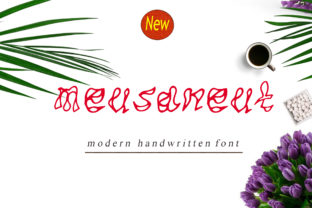
Meusaneut: Creative Clarity in Practice
In a landscape overflowing with content, tools, and competing ideas, the ability to cut through noise and deliver something that truly resonates has never been more valuable. Enter Meusaneut — a concept that is less about a rigid system and more about a mindset for creative clarity. Whether you are a designer wrestling with a brand identity, a blogger trying to structure a post, or a small business owner mapping out your next campaign, Meusaneut offers a way to refine your thinking, strip away the non-essential, and produce work that feels both intentional and human.
What Meusaneut Actually Means for Your Work
At its core, Meusaneut is about intentional reduction. It is the practice of taking an idea, a design, or a message and distilling it down to its most honest and effective form. The name itself hints at a merging of personal ownership (meus) and neutrality (neut) — a balance between your unique voice and the clarity that comes from removing bias, clutter, and unnecessary ornamentation.
Meusaneut does not encourage minimalism for its own sake. Instead, it asks you to examine each element of your work and ask: Does this serve the core purpose? If the answer is no, that element becomes a candidate for rethinking or removal. This approach is especially useful when you feel stuck, overwhelmed by options, or unsure why a piece of work is not connecting with its intended audience.
Who Benefits Most from This Mindset
While the principles of Meusaneut apply broadly, certain groups find it immediately practical:
- Designers and creators who need to balance aesthetic appeal with functional clarity.
- Marketers and publishers crafting messages that need to cut through crowded feeds and inboxes.
- Freelancers and entrepreneurs who wear multiple hats and need a consistent mental framework for decision-making.
- Educators and hobbyists who want to share ideas without overwhelming their audience with detail.
- Bloggers and content creators seeking a reliable way to structure stories that feel both personal and professional.
Each of these roles faces a common challenge: how to be heard without being loud, how to be clear without being boring, and how to be original without being self-indulgent. Meusaneut offers a path through that tension.
Creative Possibilities and Practical Applications
Meusaneut is not a template or a formula. It is a lens through which you can view any creative problem. Below are several ways to apply it across different contexts, each with realistic examples.
Refining a Visual Identity
Imagine you are designing a logo for a small consultancy. The client wants to communicate trust, innovation, and approachability. The temptation is to layer in icons, gradients, taglines, and multiple typefaces. Applying Meusaneut, you would ask: What is the single most important thing this logo needs to communicate? If trust is the answer, every element that does not support trust — a playful font, an abstract icon that confuses more than it clarifies — is either simplified or removed. The result is a mark that feels confident, not busy, and that the client can use consistently across platforms.
Structuring a Blog Post That Actually Gets Read
For a blogger, Meusaneut means rethinking the standard post structure. Instead of a lengthy introduction, a series of headings, and a rambling conclusion, you start with the one idea you want the reader to walk away with. Every paragraph, every example, every link either reinforces that idea or is cut. The post becomes shorter, more focused, and more likely to be read to the end. Readers appreciate the respect for their time, and the clarity makes the content more shareable.
Creating a Marketing Campaign That Connects
A marketer launching a campaign might feel pressure to cover every feature, every benefit, every statistic. Meusaneut flips that: pick the one emotional or practical need your audience has, and build the entire campaign around that. If you are selling a productivity tool, do not list ten features — show how it solves the specific pain of "I never have enough time for deep work." The message becomes sharper, the audience feels understood, and the campaign performs better because it is not competing with itself.
Adapting Meusaneut for Different Audiences and Platforms
The same principle works differently depending on where you publish and who you are talking to. Understanding these variations helps you apply Meusaneut without losing relevance.
For Social Media
Platforms like Instagram, LinkedIn, and TikTok reward clarity even more than long-form channels do. A Meusaneut approach here means starting with the hook — the one thing that stops a scroll — and building the post around it. No extra context, no overly clever wordplay, no visual clutter. For a creator posting a design tip, the post might be a single before-and-after image with one sentence explaining what changed. The audience gets immediate value, and the post feels intentional.
For Email Newsletters
Newsletters suffer from overcrowding. Subscribers open emails expecting value, but they often find a wall of text or a jumble of links. Applying Meusaneut means choosing one primary message per issue. If you normally share three articles, one tool, and a personal note, consider sending the personal note alone, followed by a single recommendation. Readers begin to trust that your emails will be worth their time, and open rates tend to rise as a result.
For Client Work and Presentations
When presenting a proposal or a creative brief, clarity is credibility. Meusaneut encourages you to lead with the core idea, support it with only the most essential evidence, and end with a clear next step. Avoid the temptation to include every piece of research or every alternate concept. The client does not need to see your process; they need to see the solution. A clean, focused presentation builds confidence and reduces back-and-forth.
Keeping Results Clear, Organized, and Original
Applying Meusaneut does not mean your work becomes generic. In fact, the opposite is true. When you remove the noise, your unique perspective has room to emerge. The key is to maintain consistency without becoming predictable, and to stay organized without losing flexibility.
Practical Recommendations for Daily Use
- Start with a single sentence. Before you write, design, or plan anything, write down the one thing you want to achieve. If you cannot do that, you are not ready to create yet.
- Set constraints for yourself. Limit your color palette, your word count, your font choices, or your number of sections. Constraints force clarity and often lead to more creative solutions.
- Test your work against a stranger. Show your draft to someone unfamiliar with the project and ask them to summarize the main idea. If their summary matches your intention, you have succeeded. If not, simplify further.
- Edit in layers. First, remove what is unnecessary. Then, clarify what remains. Finally, check for tone and originality. Do not try to do all three at once.
- Use your own voice. Meusaneut encourages reduction, not impersonality. Your personality, your examples, and your perspective are what make the work yours. Keep them visible even as you simplify.
Common Pitfalls to Avoid
As with any framework, Meusaneut can be misapplied. The most common mistake is oversimplifying to the point where the work loses meaning or emotional resonance. If you remove too much, you risk becoming sterile. Another pitfall is applying the mindset too late in the process. It works best when applied from the beginning, as a guiding principle, not as a last-minute editing tool.
Additionally, avoid treating Meusaneut as a set of rigid rules. It is a flexible guide. Some projects will require more detail, more emotion, or more complexity. The skill is knowing when to apply reduction and when to let your idea breathe a little. That judgment comes with practice and a willingness to listen to feedback.
Finding Long-Term Value in the Approach
Meusaneut is not a quick fix or a trend. It is a sustainable way of working that can grow with you as your projects become more ambitious. For a freelancer handling multiple clients, it offers a repeatable process for delivering consistent quality. For a small business owner building a brand from scratch, it provides a filter for every decision, from product design to customer communication. For a creator experimenting with new formats, it keeps the work grounded and honest.
The real benefit of Meusaneut is not in any single project — it is in the habit of thinking clearly. Over time, this habit becomes second nature. You start to see the clutter in your own work before anyone points it out. You begin to trust that less is not a compromise but a choice. And your audience, whether they know it or not, will respond to that clarity with attention, trust, and engagement.
If you are looking for a way to bring more intention into your creative process, start small. Pick one project, apply the idea of reduction and focus, and see how it feels. The results will likely speak for themselves — and you will begin to understand why Meusaneut is a concept worth keeping in your creative toolkit.